Coon Dogs, Magnolia Cemetery, and Graveyard Ghosts
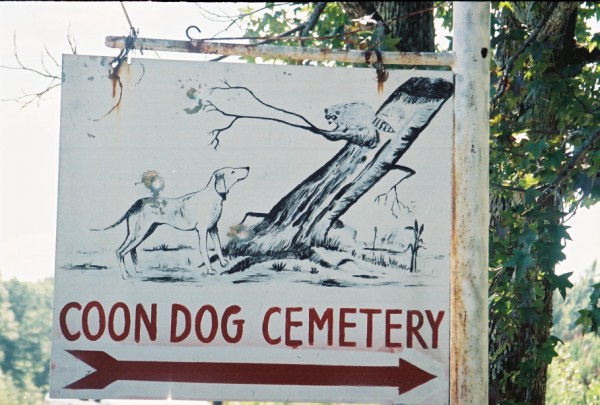
Up in north Alabama, near Tuscumbia in Colbert County, a former hunting camp has been the final resting place for faithful coon dogs for almost a hundred years. When hunter Key Underwood said a last goodbye to his dog, Troop, he knew that dog could have no happier spot than the woods where he could now run a cold trail until it turned hot and not tire, chase raccoons up every tree, and flop down in a patch of sunlight for a morning nap after a long night of hunting.
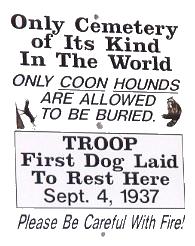
He carved Troop’s particulars (1922 to 1937) on a marker for the grave, never expecting Troop’s afterlife pack to eventually grow to over 185 coon dogs. It is officially called “The Key Underwood Coon Dog Memorial Graveyard” and managed by the Alabama Department of Conservation and Natural Resources, but most folks refer to it as the Coon Dog Cemetery, including the Friends of the Coon Dog Cemetery who look after it.
You might have noted the two different names, and in particular the distinction of graveyard or cemetery. A graveyard is historically connected to a church, adjacent to it or in the churchyard. It’s consecrated ground.
A cemetery of the kind with which we’re most familiar is a secular, carefully landscaped property, meant for visiting and the recreational mourning the Victorians enjoyed. You might visit a cemetery on a holiday or anniversary once in a while, but those Victorians showed up like clockwork not simply to commemorate their dear departed, but to stroll or ride through the park like setting. They were even encouraged to picnic in some cemeteries.
If you have an older cemetery in your town, you might see the expansive lawns and many paths based on a Victorian design. In Mobile, way south of the Coon Dog Cemetery, we have a great example of this at Magnolia Cemetery. There is no mistaking this place for anything but a deliberately planned destination for the bereaved.
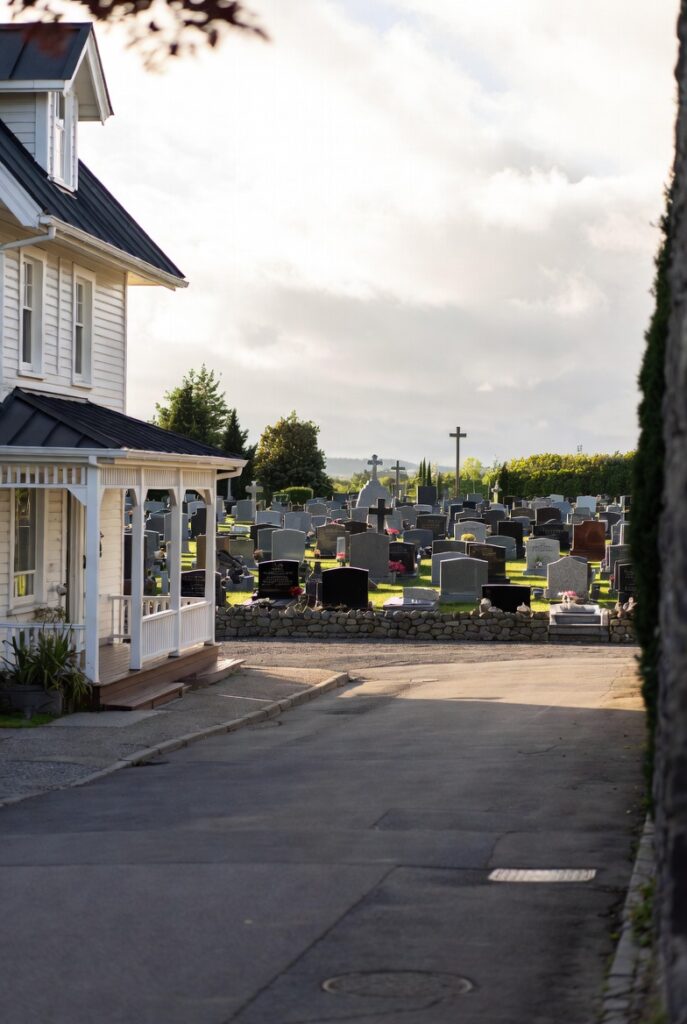
If you ever offered me the perfect house with the caution that it was across from a cemetery or graveyard, that would just be a bonus. But I did wonder what it would be like to live near the Coon Dog Cemetery, if on a full moon night some of those doggies start howling, reliving their glory days.
“What’s that noise?” your husband might ask at 2:30 in the morning, in your new home, while you stand at the window with your face plastered to the glass. And the only thing you could say would be,
“You ain’t gonna believe this.”
There are no reports of spectral hounds or ghostly raccoon hunts whatsoever at Coon Dog Cemetery. But there is an account related to me by a dear friend about a woman she knew, who long ago lived in an old house across the street from Magnolia Cemetery, and once watched a solemn procession of sorrowful people follow a black draped carriage into the side entrance, and disappear before her eyes in broad daylight.
There is also a story about a grave marker called “The Iron Maiden” which refuses to be photographed, but I had no trouble taking several shots of it. Most of the stories about Magnolia Cemetery are spooky tales and more suggestions than actual experiences, often created around the remarkable characters who are buried there.
But one day, on a beautiful afternoon, this same friend and I sallied forth out to Magnolia to pay our respects to this notable spot and the people buried there, and to sit with the dead and see if anyone wanted to speak to us. We did not take devices or recorders, just notebooks and cameras, like many other people who come to visit or research.
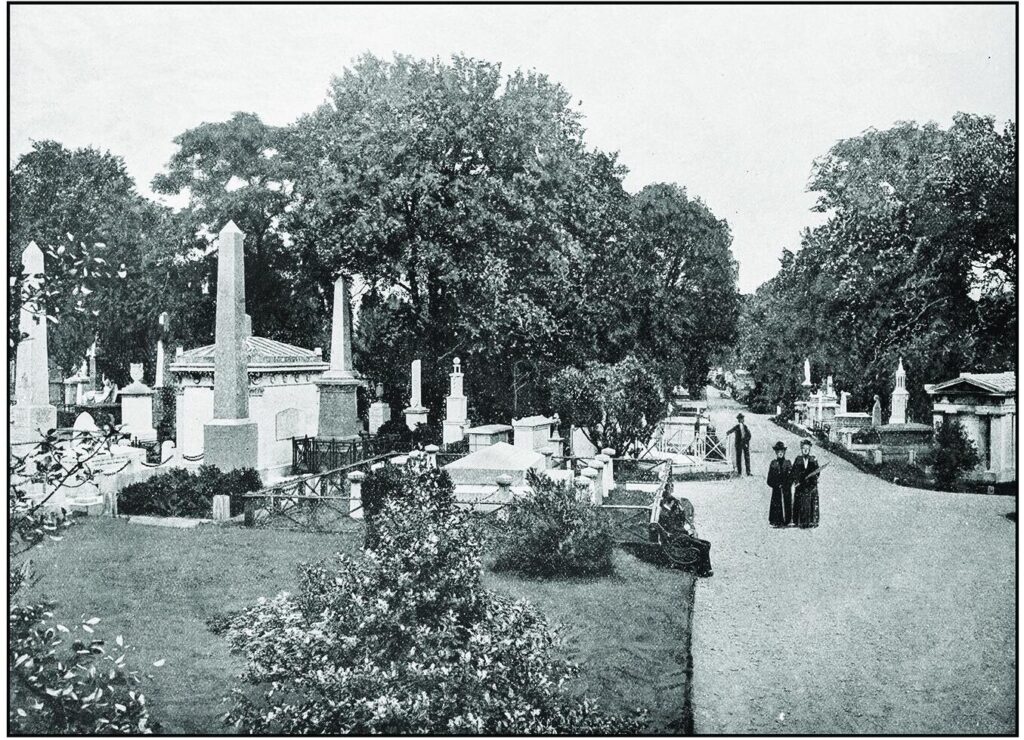
The interesting and notable thing to me, as a medium, was seeing the people in spirit strolling through the cemetery. They were dressed in Edwardian clothing, and they were in no hurry as they moved down the roads and between the grave markers. There was no stress, sadness, or upset; there was only calm and peacefulness, and the spirits seemed to be in conversation with each other, talking as friends do.
Just as it was designed to be in their day, these spirits came to walk and remember their earthly lives and loved ones in a well-cared for park that reassured them all was, finally, well.
These ghosts did not talk to me and I did not try to connect with them; but later, having wandered a bit to another area of the big cemetery, my friend and I sat down in the shade of a tree and I met someone.
A young woman began to speak to me, and show me pictures of her death. She was not stuck there, or sad. I was there, she was there, she picked up the energetic phone and shared something about her ending with me and it was fascinating.
In my mind, like a movie clip, I saw her bedroom. I watched as if I stood on one side of the room and across from me was a wall with two windows. The neatly made bed, a small one as would have been common at the end of the 19th century, stood near the windows. There was a washstand. It was daytime; sunlight came through the lightweight, almost sheer curtains. The room was empty, and she was not in the bed.
She was showing it to me as she remembered it, and if felt like she stood behind my right shoulder, communicating with me. She had taken sick. She was not chronically ill, but fought this complaint long enough for her family to realize she would not get better. She was about nineteen, not married.
But here is the amazing thing. I have always pictured a traditional death scene as a sudden ray of that classic white light breaking through from above, and drawing the soul right up into it. But this young woman showed me, and had me feel, how the big light had suddenly come up from under her as if it swelled forth from the earth, and like a powerful wave it lifted her essence as she left her dying body.
I was astonished. And having delivered that bit of information, she was gone.
We are told from earliest memory that God, or at least the idea of heavenly, better things, is apart from us and far overhead. This keeps all things Divine conveniently out of reach, and maroons us in the physical world until (if we’re lucky and make the grade) some huge net comes down when our time comes and scoops us up like a passenger who has fallen overboard.
What a difference to imagine a great life force energy not far away, but in the earth just under our feet, unseen and unrealized but secretly supporting everything we do, until it ultimately propels us out of our physical containment and into the higher atmosphere of nonphysical energy. I think about being told we rise up, and if rising doesn’t mean lifting off from below, wouldn’t we have been assured instead that we’d be pulled up? Yanked out of our graves on judgement day, if you follow that theology?
Gosh, how I’d rather find myself lifted like I was suddenly flying, than hauled upward like a bucket out of a well. The unseen world is here around us all the time, not floating remotely above, invisible and separate. When we no longer have mass, we shake off the gravity that holds us down and melt into the Divine atmosphere on the updraft.

It is a happy feeling, to imagine that sudden whoosh surging up through the lifeless body of Troop the coon dog and setting him carefully back on his feet, like a pair of gentle hands giving him a boost from below. Surely any wise dog, and apparently Troop was a very smart coon hound, would immediately trot off, following his nose, into an immensely happy afterlife in the woods he knew and loved.
When Key Underwood buried Troop, “graveyard” would have been a more familiar and comfortable word than cemetery, for that time and place. But I like it, also, because of the hint of consecration, and how holy that site would feel to people who had parted with their beloved companions, as they brought them to join Troop in the wild north Alabama woodlands.
The closest the Coon Dog Cemetery comes to anything like Victorian recreational mourning comes annually on Labor Day, and it is more a lively celebration of the pure, joyful existence of the unique location than a somber salute to the dogs gone ahead. The rest of the year, people make their way out to visit this resting place, which would rival any human cemetery with its variety of grave markers and tributes.
The Victorians would have understood; they did not go to the cemetery expecting to literally commune with the dead (only crazy people do that, right?) Nor did they think for one minute that their deceased loved ones were trapped there, curled up against their headstones, weeping and lost.
Although I have encountered spirits in graveyards and cemeteries, I would not say a place like Magnolia Cemetery or the Key Underwood Coon Dog Memorial Graveyard is haunted. Sacred, by church or by intention? Absolutely. But sacred to the living people still in the physical world, not the spirits already freed by the transition of death, and literally let off the leash.