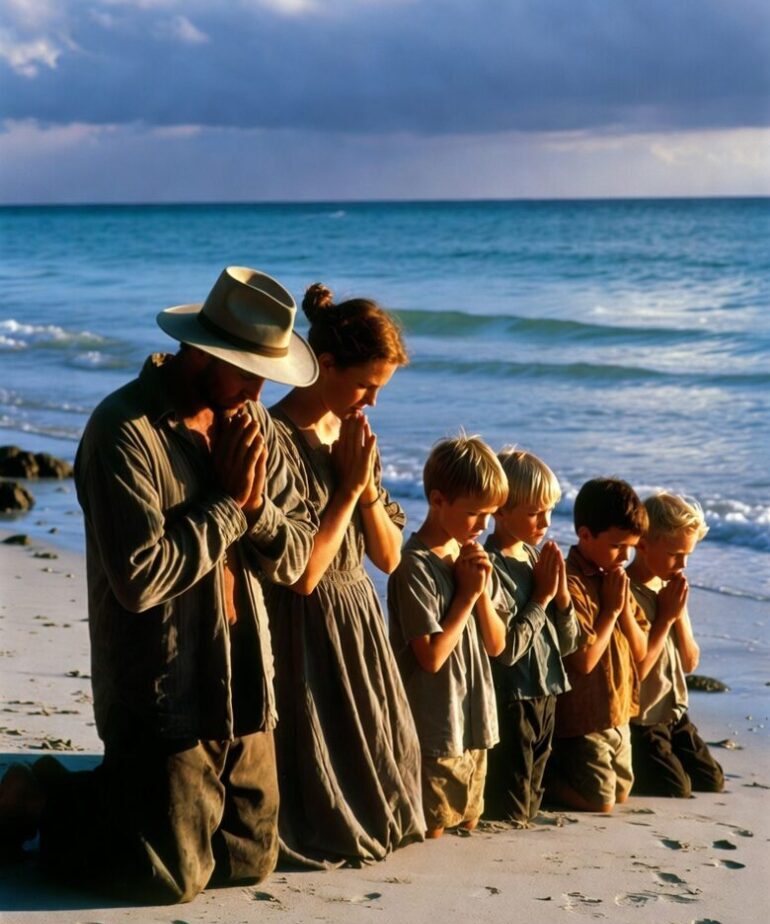
The phrase I most often use in readings of the last few years is, “Don’t freak out.” Usually anxiety makes me burst forward with this assurance on the inbreath, in a hurry to stave off the alarm that comes with our usual spreads flipping over reversed cards, harsh cards, icky cards, and just plain stuck cards. Then the outbreath is a very, very long sigh.
But somewhere in there I also began to insert, “Adapt and overcome!” as a rallying cry while reading these continually disheartening, garbage spreads. That has been on my mind a lot.

In fact, friends, in the new religion I just started, this phrase is carved in stone over the door frame of the temple; or more correctly, it’s burned into a plank that washed up on the beach and is suspended by vines woven into cords, decoratively enhanced with old barnacles. Adapt and Overcome, brothers and sisters; all who are striving to survive these days are welcome at our tree house, the Church of the Swiss Family Robinson.
Robinsonites, we are all shipwrecked now. And like the Robinson Family (praise them,) we need to embrace it. It’ll make things easier.
And how, exactly, might you compare yourself and your current situationship with the world at large to this eighteenth century tale of survival and shaping an unfamiliar environment into a place of provision and safety, and come to the same place of enlightenment as I? I don’t know, have you:
- Been sent out into the world with hope but no guarantees
- Gone wildly off course
- Been deserted by people you counted on to help you
- Scavenged what you could from disaster
- Made do with what you had on hand
- Altered your expectations, pared them down to the bone
- Confronted things you never imagined in your old life
- Wondered if the world had split in two, the before life and the after one
Well, have you? Because if any of that strikes a chord, you might be a born Robinsonite or at least ready to embrace the principles.
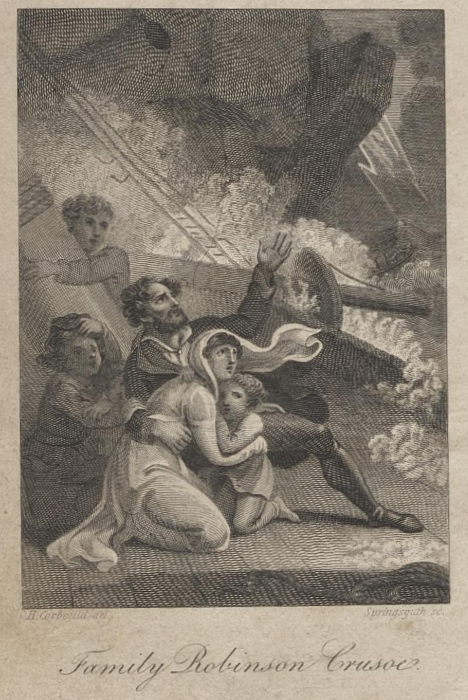
The author of this mighty novel, J.D. Wyss, intended it to instruct and encourage practical skills and self-reliance for his readers. Rather than waste a lot of time hewing out the foundation, he jumped ahead and set his fictional family up with a father who was a walking encyclopedia of all known facts, four sturdy sons, a ship conveniently loaded with everything you would need to set up a new colony, devout faith in God, and a supernaturally serene and patient mother. It’s the template for the most fantastic homeschool summer adventure ever.
Dear ones, before I realized I was a Robinsonite, I found life to be one difficult and dreary newsfeed after another. If I’d been on the ship with the Robinsons, they’d have quickly removed me from their cool jungle lodgings and left me to spend all day on the beach, staring at the horizon while the wind tore at my tattered clothes and sand fleas feasted on my ankles.
None of that for the Robinsons – of course they wanted a rescue ship to come, but it was, astonishingly, not their highest priority. And so it is for the Church of the Swiss Family Robinson: the choice, like the Robinsons, is to make every day better than yesterday.
Adapt and overcome. Like all neophytes, I struggle to do that because there is nothing I would rejoice more than life restored to times I remember as being better, calmer, more decent, respectful of others, and greatly more intelligent. I do go down to the shore each morning to look for the rescue ship to take us back to civilization, only I call it “checking the news.”
“Oh my God,” I shriek. Father Robinson looks up from his workbench and calls to me from the tree house, “What is it, heathen? What troubles you?”
And I rattle off the latest series of horrors, and even ask him to come to the beach so I can pull up the horror and he can read about it himself and be personally horrified and not simply second-hand horrified, but he only shakes his head.
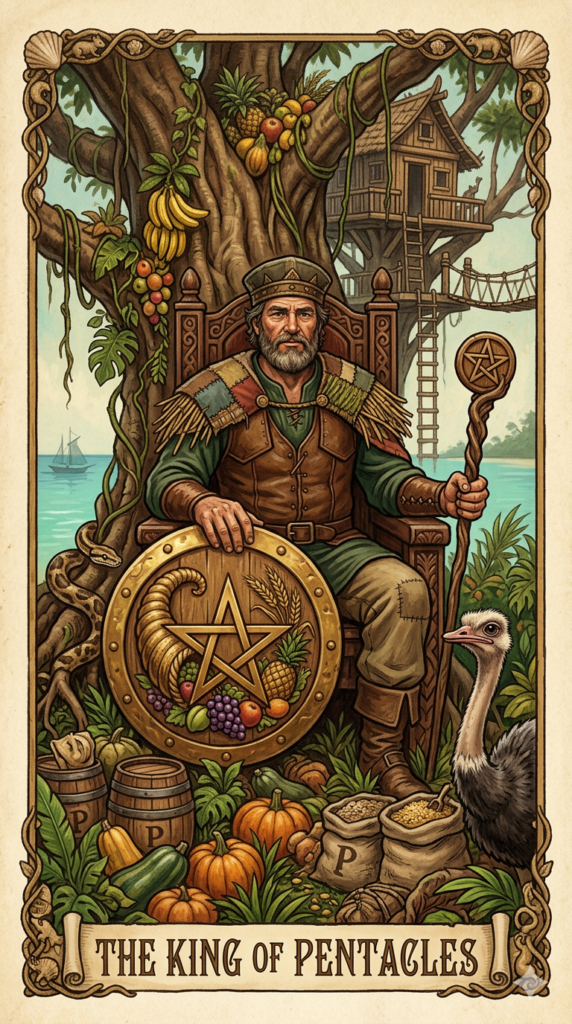
“I can scarce conceive of it,” Mr. Robinson says. “But I will consider it later after I have distilled the juice of the rubber plant the boys found into a watertight encasement for our coats, and cobble rubber boots for all of us. Once again God’s unfailing provenance saves us from muck and mire when we must move the stock during the rainy season from the low pasture to the high!”
This is one of the sacrifices the Church of the Swiss Family Robinson demands: to know and not care. Because, as Mr. Robinson would have asked me if he had not been preoccupied with his cauldron of boiling sap, what could he possibly do about it?
I’m stuck on that one, although I see the advanced wisdom of it. It’s dazzling and just out of reach for me, as things are. But I am practicing the other tenets, and I find my days go much better when, disregarding what might previously have been on the list, I wake up with a Robinsonite intention of, “Right. What can I make out of this day?”
Long ago (pre-2020,) when people entertained long term goals and expectations, it was good to make schedules and maps of how to run our lives and navigate with an aspirational compass. It was encoded in our DNA, to set out to make something of ourselves with regular marker posts along the way. If we failed to check the boxes for any one day, it was okay; everybody has a lousy day once in a while.
But too many of those, and too much interference from the world around us, and being swept off our feet by not just a volley of bad days but entire years spent in uncertainty as we have – the old rules don’t seem to apply at all anymore. We are trying to run old programs on devices that don’t recognize them, and our results are too often miserable or only attained by skirting the rules, and cheating.
It’s a miserable way to live, and another tenet of the Church of the Swiss Family Robinson is to avoid being miserable, and embrace comfort, in every circumstance and to the fullest extent your imagination, dedication, and hard work will allow.
The Robinsons did not just build a shelter; they created a home, imagining what they could do to dwell in as much contentment, efficiency, and convenience as possible. It wasn’t enough to lash some poles together and stuff dead brush through the gaps, although that would have kept the rain off.
But the Robinsons embraced the shift in their lives and went only forward, never back, and forward was going to be good. Not just survival; a new life. They even destroyed the wrecked vessel that had marooned them there, after they’d stripped it of everything usable. They literally burned the boat like Cortes, using gunpowder to obliterate it and symbolically marking that there was no retreat from where they found themselves.
When you are not constricted by the old world anymore, a new one opens up.

In the two hundred years that separates us from the culture that created this fantastic tale, I can find certain things in the canon to be difficult, as in any theology. I don’t love how the Robinsons met every new animal encounter with a “tame, saddle, eat, or kill” mentality, for example. But I admire the gusto that built that pillar of the church.
Originally, the Robinsons were presumed by the reader to have lived out their lives on the island forever; but further editions of the book had them discover a young lady, herself marooned for some time and hardily making a successful life that involved more crafting, and less slashing, of the flora and fauna.
This injection of feminine energy into what had been a purely masculine tale reflected the slight movement of Western thought toward considering that women might have brains and ideas, and it was much welcomed into the evolvement of the doctrine. In this later edition, a rescue ship pulls up around the same time, and there is much rejoicing.
Some of the Robinson children wish to go back to Europe with their liberators, but Mr. Robinson looks around at what they have created, and he is satisfied and completely happy. The idea for a new colony, the desire that prompted the whole adventure, is finally realized despite everything that seemed to doom it as New Switzerland gets marked on a map for others to find.
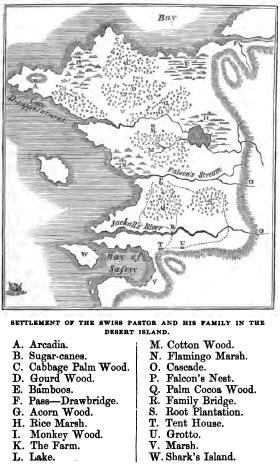
Is it an easy practice, prospective brethren? This road is wide, but only if you look forward. When you turn to peer anxiously at what might be behind you, it narrows like a trailing thread. Only by keeping eyes front and one foot after another in a forward march can a pilgrim tread the broad path of the Robinsonite. The way forward is unlimited. The shiny offramps to the chaos of the world and the emotional relief of falling into the agendas of others? Always a temptation, and one that might take a lifetime of devotion to overcome.
We are all shipwrecked now. Our biggest test is to decide if we wait on the beach for the old world to come save us, or walk into the jungle with all the calm awareness we can muster up.
The Church of the Swiss Family Robinson promises that if we do the hard things and make what we can of each day, ignoring the things we can do nothing about, we will create a meaningful life. With enthusiasm we go always forward, never back. For Robinsonites, building is both the way in, and the way out.