- The Post
- Questions for Journaling or Reflection
One of my favorite vintage ghost stories was originally published by Stackpole, and then snapped up and reissued by a major house looking for the next Amityville Horror. It won the 1977 National Writers Club Award for Nonfiction, for Pete’s sake.
The Limits of Creative Nonfiction
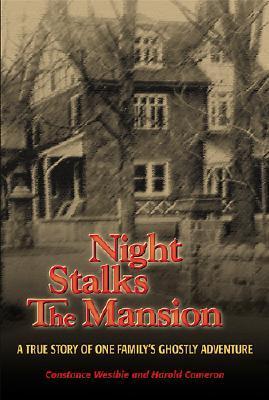
Night Stalks the Mansion, cowritten by Constance Westbie and Harold Cameron, is a much better story than Amityville because it is coherent and down to earth. The haunting episodes never sway into gory horror with supernatural floating pigs, black ooze, or hidden basement lairs. Still, the spook-creep of footsteps, door slams, smells, apports, unseen glaring presences, and consistent heavy, unidentified boots trudging around outside in the gravel and up onto the porch? Very affecting.
Harold Cameron and his wife Dorothy moved into an old Pennsylvania mansion they leased for a steal after Cameron’s company abruptly moved him clear across the country. The Camerons had five kids, and the size of the house seemed a blessing at the time; but they barely lived out their two year tenancy because of the ceaseless supernatural activity.
The book is written from Cameron’s point of view, and is well done. You can feel his frustration and determination to piece together some foundation for the unsettling events his family experienced, and a subplot of the story is Cameron’s friendship with an elderly gentleman he calls Enoch. Enoch has been around the place for decades, and knows more than he wants to share.
Eventually, and conveniently for story-telling purposes, Enoch spills the terrible history that created the hauntings but begs Cameron not to tell Mrs. Cameron, at least not until they have moved and are clear of that house. This happens shortly after Enoch’s revelation.
The tale seems to Cameron to make perfect sense, and ties up their experience with a grimy, tattered bow.
Except, if this happened as Cameron relates it, he took it all on faith and never checked the historical record of the property or its owners. Later he became the minister at a Church of Religious Science, and became a New Thought believer. Mr. Cameron’s compassion, intelligence, and kindheartedness probably made him a wonderful pastor, but I think calling his story entirely nonfiction is a stretch.
The Paranormal Industry Hates Mystery
The 1970s, when this book was published, saw a boom in interest in formerly “occult” topics, like the Bermuda Triangle, UFOs, Bigfoot, and most importantly, ghosts and hauntings. Not everybody is going to fly through the Bermuda Triangle or take a blurry photo of Bigfoot, but the odds of someone having a ghost story, or being ghost story adjacent? Very high. What a virtually untapped market on the back end of the Age of Aquarius!
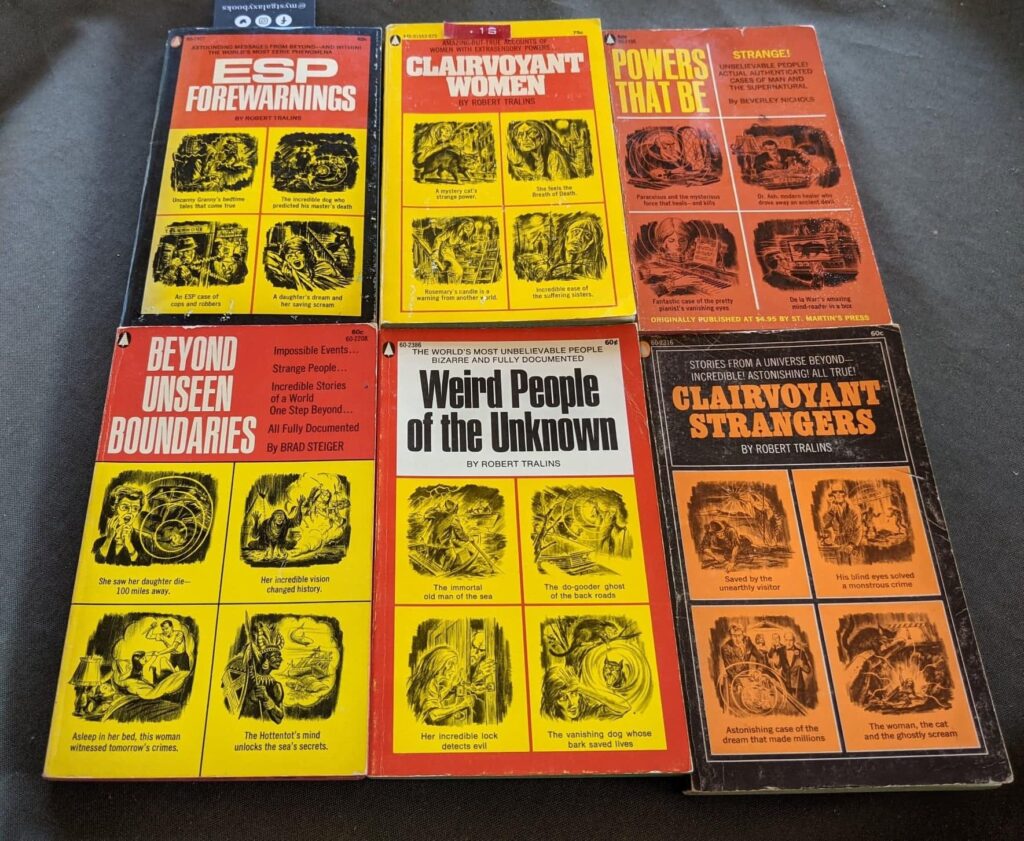
The New Age market ran into one problem, and that was the very problem that made it interesting: mystery, uncertainty, and the lack of tidy endings. Or any ending, really. Mysteries and hauntings keep us coming back for more because they are ongoing, and unresolved.
The New Age market, and the Paranormal industry, are happy to supply answers (tropes, investigations, and demons) or sell us incremental advances up a cheery ladder of spiritual self-help that promises to ultimately lead to some sort of ascension or perfection. Neither of these business models can tolerate uncertainty or mystery.
Given how popular they are, apparently a lot of consumers aren’t ready for that, either.
Night Stalks the Mansion is a story that takes its place among other historically questionable but highly marketable entries like The Winchester Mystery House, The Myrtles Plantation, and The Conjuring House. In my opinion, the tales of these hauntings are simply not supported by the historical record. Are these locations haunted? Maybe. But where do the experiences stop, and the storytelling begins?
The Philadelphia Inquirer was equally dubious about Night Stalks the Mansion and thoroughly debunked the plot line meant to support the haunting; but Cameron and Constance Westbie might have been working under the umbrella of “creative nonfiction” and used that as a vigorous defense.
Creative nonfiction is the idea that a good writer’s job is to take a series of facts and events and weave them into a compelling, easy-to-follow and enjoyable story. It’s the truth, but added context, sensory detail, and description gives the truth a setting and a way for the reader to relate to it.
A writer uses acceptable nonfiction techniques, like pseudonyms and slightly changing locations in order to shield real people who don’t mind making their experiences public, but aren’t keen to expose their whole lives. It gets shaky when writers don’t reveal to the reader that they chose to invent entire characters (I think Enoch was a composite figure) from bits and pieces of real people, and shakier still when they use local rumor and gossip to make up a story line entirely.
I think most of the events reported in Night Stalks the Mansion probably, mostly, happened. But I suspect, when the first draft was written, the supernatural events hung like thick fog in and around the story of a frightened family in inexplicable circumstances, and something was needed to act as the sun coming out, to disperse it and put things to rest.
So the story of Enoch and his revelations, probably taken from local lore, got crafted to give us our, if not happy then at least satisfying, ending.
Living While Haunted
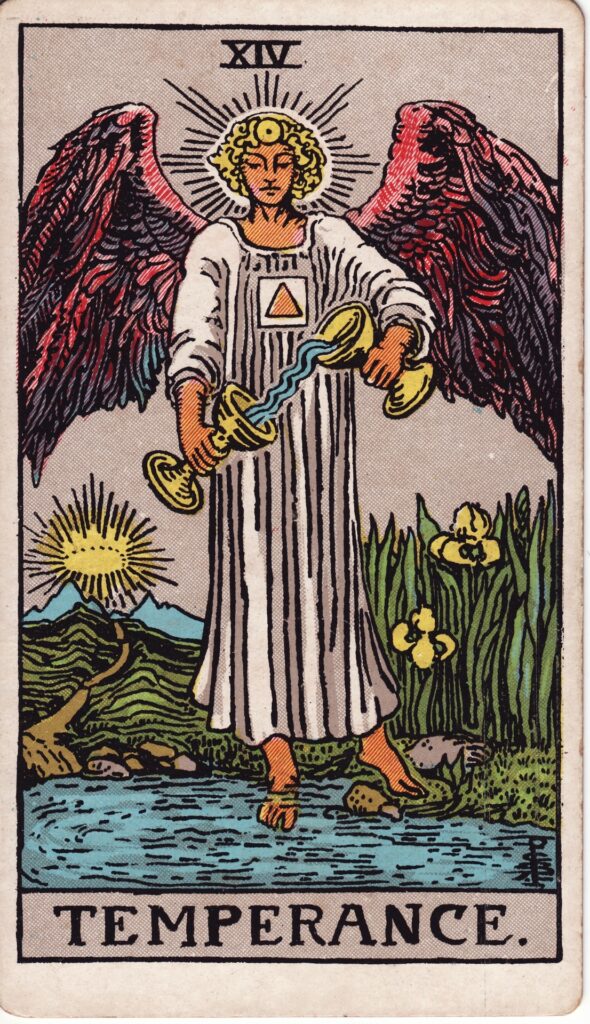
We don’t actually need endings; we’ve just been convinced we do so we’ll be comfortable paying for them. What we do need is meaning, and that can exist on its own just fine. (Sidenote: in Tarot, this is the Temperance card. She teaches us to hold space gracefully, and not be bullied into a rushed and panicked conclusion before we are ready.)
Would the Cameron family’s experiences have been as meaningful without the explanation he settled on? I think yes; Harold Cameron had earlier in his life attended divinity school, and when his corporate career ended he took up the ministry in a church that was completely open to expanded consciousness and other realities. Surely his experiences, whatever they were, in the Pennsylvania house cracked him open for further consideration of the unseen world and reawakened an unmet spiritual curiosity.
So it is with almost everyone I have met in my years with ghosts, and my own supernatural world. Ghosts and mysteries, viewed from a distance, are fascinating and we are doubly pleased if we get that satisfying ending that connects all the dots.
Up close, people don’t experience a haunting so much as live a haunting. Having ghosts in the house is not like squirrels in the attic; a problem to be solved, an ending to provide. Ghosts in the house are a relationship. Our experience with ghosts tells us something about ourselves, whether we know it or not.
And sometimes it tells us we can live fully in meaningful situations, and be content when they offer no clear resolution.
Questions for Journaling or Reflection
Have you experienced something unexplained—a haunting, a coincidence, or a deeper mystery—that never received a clear resolution or explanation? How did living with that ambiguity affect you, and what meaning (if any) did you eventually find in it?
Many of us have been conditioned to need tidy endings and satisfying explanations. Where in your own life do you notice a strong pull toward resolving mysteries or forcing a narrative onto events? What happens when you resist that urge?
Harold Cameron’s experiences in the house appear to have cracked him open to a more expansive view of reality and eventually guided him back to the ministry. Did an unsettling or mysterious period in your own life quietly redirect your path or deepen your spiritual curiosity?