A podcaster I listen to always opens the show by asking her guest, “What is enlightenment?” Most answer with some version of awakened consciousness. If I were ever in the hot seat, I would say, “Enlightenment is a verb, the way by which we explore The Mysteries.”
That’s true at least for me. But the followup question would be, what are the “mysteries” and why do they matter?
If you look up a meaning for “the mysteries” you will get this secular definition: hidden, inner, or symbolic patterns of life as opposed to the visible, superficial (exoteric) world. The mysteries make up esoteric (inner) life, the life we are supposed to keep neatly contained through our religions or wrestling with it, or ignoring it altogether.
Most of us keep the esoteric life within a boundary drawn by traditional religious practice, or a spiritual belief system we have cobbled together for ourselves. Some choose to believe nothing is esoteric because we are random collisions of molecules trapped together for the space of a lifetime, and surviving the exoteric world is challenge enough.
I didn’t hear anything about the mysteries when I was a little kid, because I grew up Methodist in the 1970s. “The mysteries” were too exotic for Protestants (excepting of course the Southern Baptists who were already overly dramatic with their religion and whom, it was suspected, were just waiting for a chance to embrace another practice to be boldly and publicly righteous about.)
Catholicism was even more separated from my religious consciousness than the Baptists; it was certainly alright to have Catholic friends, but not any so close that they might get their Popish hooks into you with the theater and the drama, which most definitely included the mysteries.
The sly joke on everybody is that, religious or not, what we call The Mysteries exist; they create the framing of the esoteric world. It is up to you if you wish to fling a leg over the tall gates that enclose our hidden interior structure, and make your way forward.
Once in, though, the path divides between traditional religion and pagan practice.

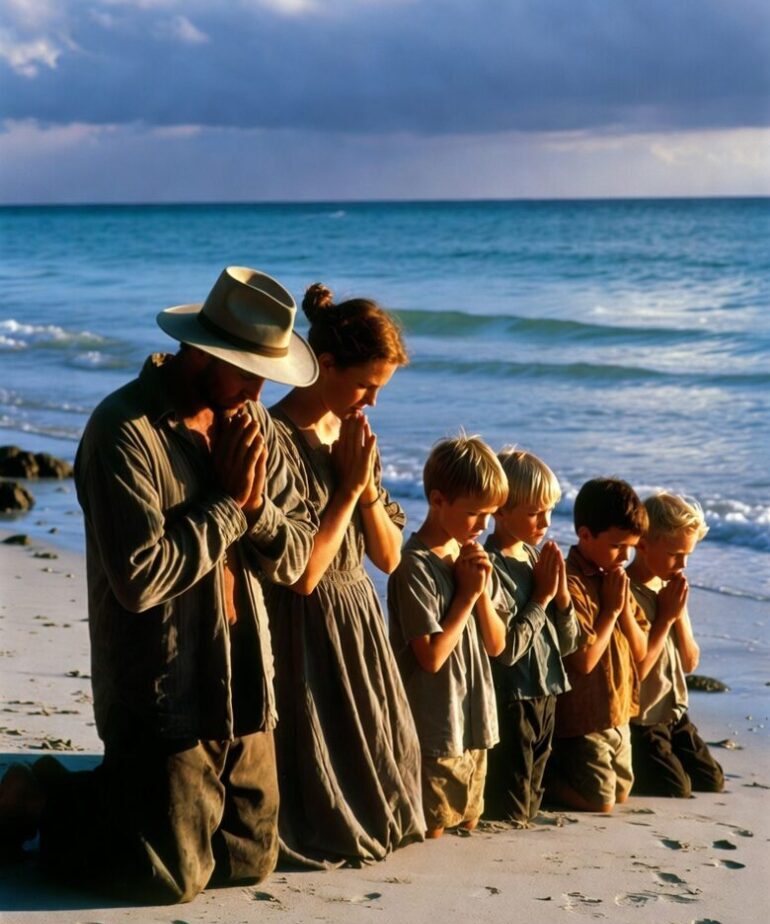
For Christians and Jews, the mysteries of God (which include sacred truths, doctrines, rites, and experiences that transcend human reasoning) are only revealed by the Divine. Understanding how God works in the world, from creation to the end of days (or birth to death,) is bestowed on faithful believers through devoutly following certain practices, or dedicated study and service.
You can strive mightily to fully understand God’s Divine Mysteries, but you never will. What you will do is train yourself like an elite athlete to be mentally, spiritually, and emotionally fit enough to bear the awesome wonder of it should God decide to touch your fragile human heart with even a tiny flash of Divine totality.
It is different for Pagans. Historically, Pagans were instructed in rites and initiated into worship with the goal of spiritual transformation that would ultimately bring them into contact with the Gods themselves, and having reached that goal gain in wisdom and understanding of the mysteries as they developed a personal familiarity with deity.
Pagans delved into the same mysteries as the monotheists who came after them; but they did so by personal and participatory experience, whereas the monotheists ground their belief in faith and patience. That is the essential difference.
Outside of our religious practices, people don’t talk much today about the mysteries, and I think that is a loss. Talk about it or not, the mysteries are there and it doesn’t matter to which religion (or don’t) you belong.
The mysteries are the unseen things of this world, and the very ability to say, “I have no idea what this means” allows us to exist in the exoteric world without losing our minds. The world is a great puzzle, and if humans had nothing beyond it we would grow bored and complacent; and when we grow bored and complacent, we get into trouble.

If we were locked solely into this exoteric experience, we would drive ourselves crazy looking for the answer to every question and cataloguing every single solitary thing; solving and archiving what is earthbound, completely physically situated in this existence, growing increasingly neurotic and focusing on tinier and tinier things.
Instead, the mysteries are afloat in our consciousness, and the esoteric is a Divine gift regardless of how little or how much we understand it in a lifetime.
Ghosts are mysteries, what is sacred is a mystery, the Universe is a mystery, divination is a tool for entering the mysteries. Everyday quirks, coincidences, synchronicities, blessings, and random chance occurrences are evidence of the mysteries. Will we ever understand them? Surely not, in our limited physical being. But like our ancestors or loved ones, we can participate in them, ponder them, respect them with awe, and through them draw closer to understanding the Divine.